


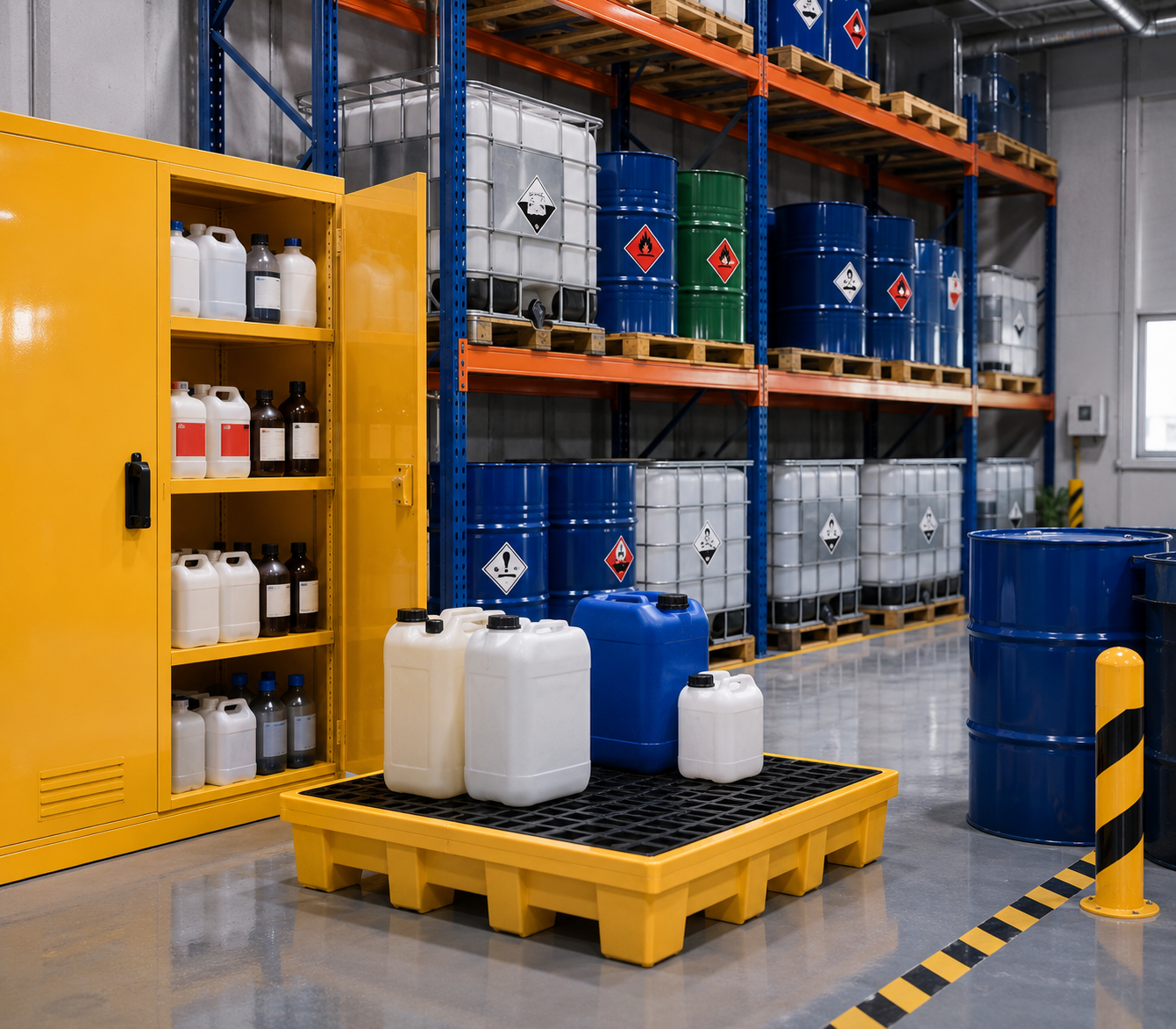
Proper chemical storage is essential for maintaining workplace safety, protecting employees, and preserving the quality of industrial chemicals. Whether storing Sulfuric Acid (H₂SO₄), Hydrochloric Acid (HCl), Sodium Hypochlorite, or Liquid Caustic (NaOH), following the correct storage practices helps prevent accidents, contamination, and costly damage.
1. Store Chemicals in a Cool, Dry Area
Keep chemicals in a well-ventilated location away from direct sunlight, excessive heat, and moisture. Stable storage conditions help maintain product quality and reduce the risk of chemical reactions.
2. Use Properly Labeled Containers
Always store chemicals in their original or approved containers with clear labels showing the product name, hazard information, and handling instructions. Never use damaged or unmarked containers.
3. Separate Incompatible Chemicals
Certain chemicals should never be stored together because they can react dangerously if mixed. Organize your storage area carefully and keep incompatible chemicals in separate, designated locations.
4. Keep Containers Tightly Sealed
Ensure all containers remain securely closed when not in use. Proper sealing helps prevent leaks, contamination, evaporation, and exposure to hazardous fumes.
5. Install Secondary Containment
Use spill pallets, bunds, or containment trays beneath chemical containers to capture accidental leaks or spills and prevent environmental contamination.
6. Maintain Good Ventilation
Chemical storage areas should have adequate airflow to prevent the buildup of harmful vapors, especially when storing corrosive or volatile substances.
7. Restrict Unauthorized Access
Only trained and authorized personnel should have access to chemical storage areas. Secure storage helps reduce the risk of accidents and improper handling.
8. Perform Regular Inspections
Inspect containers, labels, shelving, and storage areas regularly for signs of corrosion, leaks, or damage. Address any issues immediately to maintain a safe working environment.
9. Keep Emergency Equipment Nearby
Every chemical storage area should include:
- Spill response kits
- Fire extinguishers
- Eyewash stations
- Safety showers
- Emergency contact information
Quick access to emergency equipment can significantly reduce the impact of an incident.
10. Follow Safety Regulations
Ensure all storage practices comply with local regulations and industry safety standards. Regular employee training and proper documentation help maintain compliance and improve workplace safety.
Conclusion
Safe chemical storage is a critical part of every industrial operation. By following these best practices, businesses can protect employees, preserve chemical quality, reduce operational risks, and maintain compliance with safety regulations.