


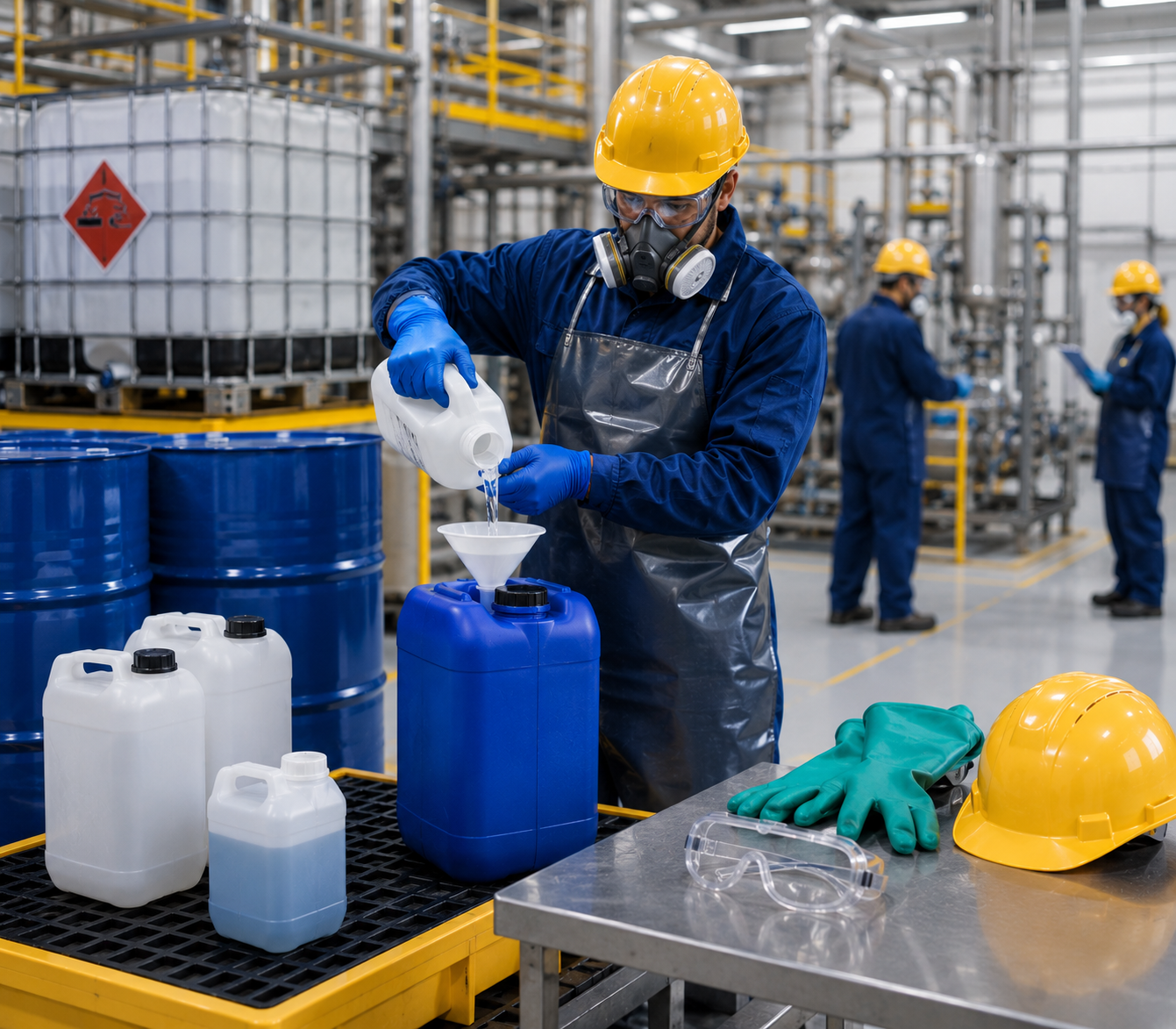
Handling industrial chemicals requires strict safety measures to protect employees, equipment, and the environment. Whether working with Sulfuric Acid (H₂SO₄), Hydrochloric Acid (HCl), Sodium Hypochlorite, or Liquid Caustic (NaOH), following proper handling procedures helps reduce risks and ensures safe, efficient operations.
1. Wear Appropriate Personal Protective Equipment (PPE)
Always wear suitable PPE, including:
- Chemical-resistant gloves
- Safety goggles or face shield
- Protective clothing
- Safety boots
- Respiratory protection (when required)
Proper PPE minimizes exposure and reduces the risk of chemical burns and injuries.
2. Read Labels and Safety Data Sheets (SDS)
Before handling any chemical, carefully review the product label and the Safety Data Sheet (SDS). These documents provide essential information about hazards, safe handling procedures, storage requirements, and emergency response measures.
3. Store Chemicals Correctly
Industrial chemicals should be stored in a cool, dry, and well-ventilated area away from direct sunlight and incompatible substances. Always keep containers tightly sealed and clearly labeled to prevent contamination or accidental misuse.
4. Use Proper Handling Equipment
Transfer chemicals using approved pumps, containers, or dispensing systems designed for corrosive materials. Never use damaged containers or equipment that may react with the chemical.
5. Avoid Mixing Incompatible Chemicals
Certain chemicals can react dangerously when mixed. Ensure all employees understand chemical compatibility and never combine chemicals unless specifically instructed by approved procedures.
6. Maintain Good Ventilation
Work areas should have adequate ventilation to prevent the buildup of hazardous vapors or fumes, especially when handling corrosive or volatile chemicals.
7. Prepare for Emergencies
Every workplace should have:
- Emergency eyewash stations
- Safety showers
- Spill response kits
- Fire extinguishers
- Clearly marked emergency exits
Employees should also receive regular emergency response training.
8. Train Employees Regularly
Continuous safety training ensures employees understand proper handling techniques, hazard communication, emergency procedures, and safe workplace practices.
Conclusion
Safe chemical handling is essential for protecting workers, maintaining operational efficiency, and complying with industry safety standards. By following these best practices, businesses can minimize risks and create a safer working environment while ensuring the reliable use of industrial chemicals.